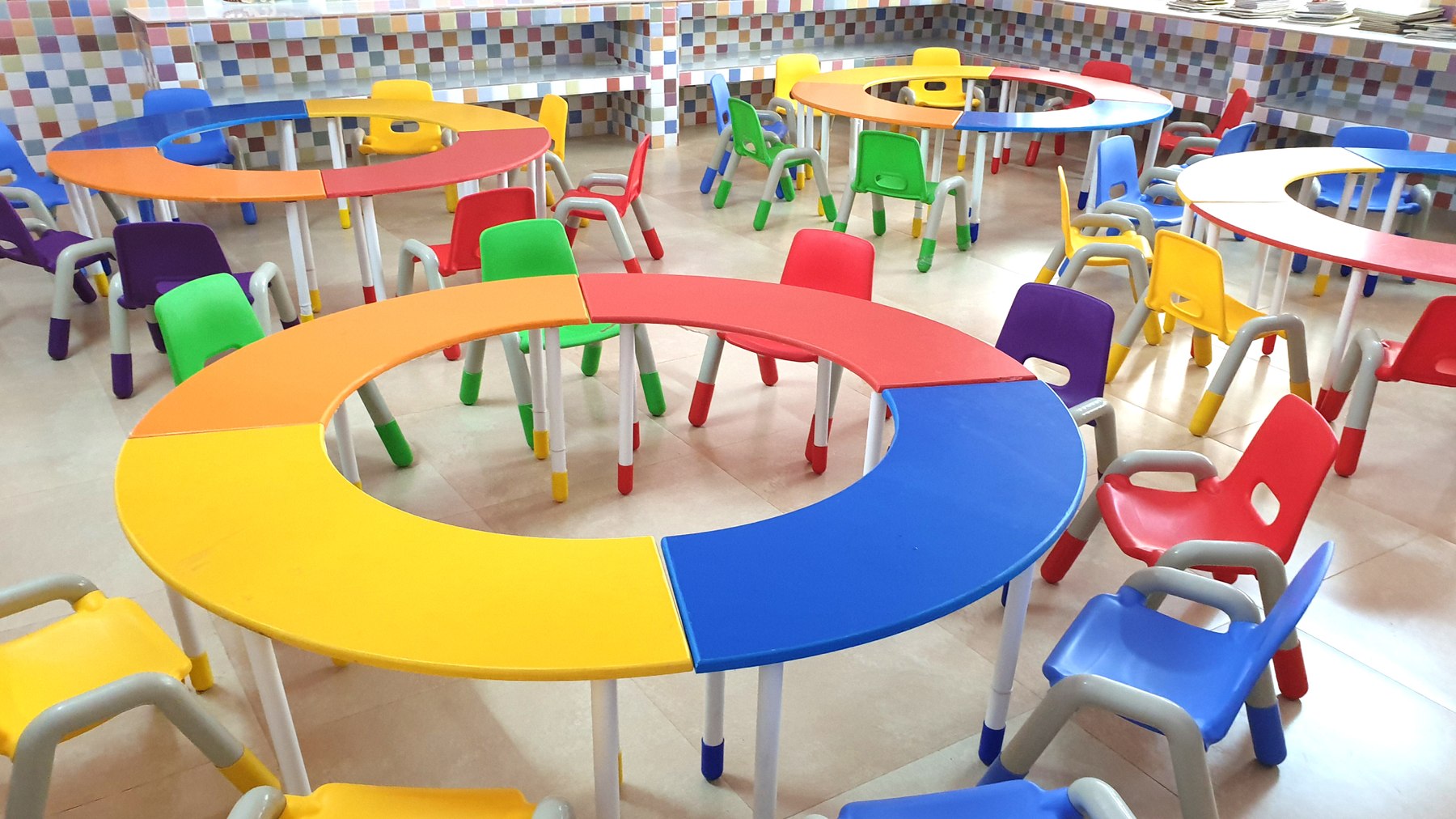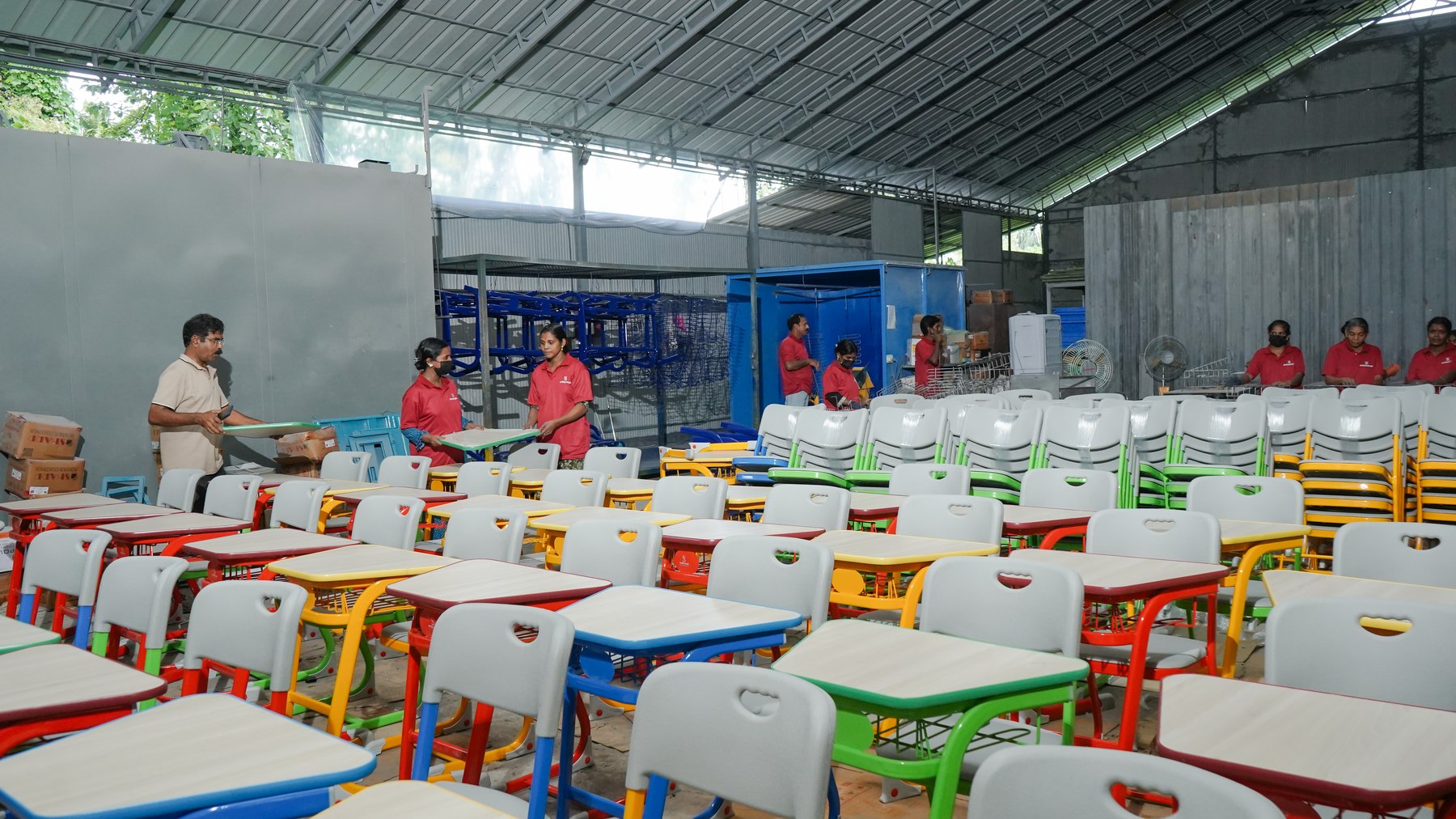
Institutional furniture is bought on a specification and lived with for years. What happens between those two points is manufacturing — so it is worth being specific about what ours involves.
It starts as a drawing
A dedicated team of design engineers works in computer-aided design and 3D profiles, taking a concept from virtual to reality. That matters for custom work: a room with an awkward column or a non-standard ceiling height is solved on screen before any steel is cut.
Cutting and forming
Our facility runs high-volume sheet-metal laser cutting and punching, and a full range of press-brake bending and forming. Laser cutting is what keeps a repeated part repeatable — the two-hundredth frame matches the first, which is what makes a classroom of desks look like a set rather than a collection.
Welding
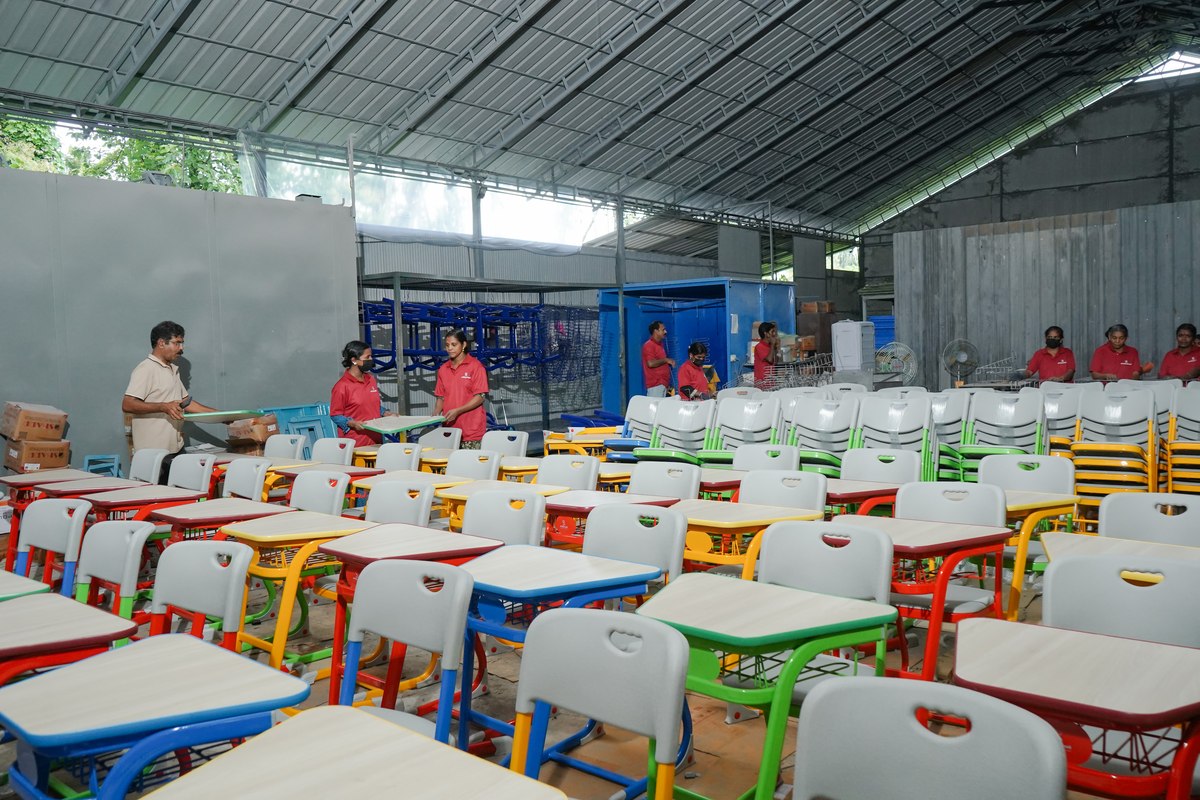
Frames are joined with high-grade MIG, spot and laser welding, chosen for the joint rather than for convenience. School furniture is not handled gently; the joints are where furniture usually fails first.
The finish is not cosmetic
Everything goes through an anti-corrosion powder-coating line finished to 50–60 microns. In a humid climate, and in rooms cleaned with water every day, the coating is what decides whether a frame is still sound in ten years.
Why it is all under one roof
Doing design, cutting, forming, welding and finishing in our own unit is what lets us change a size, a height, a colour or a configuration without changing the price structure or the lead time. It is also why we can quote a room rather than a product code. We are ISO 9001:2015 certified and everything is made in India.
If you are planning a classroom, a laboratory or a whole campus, tell us about the space and our project team will work through the layout, the specification and the schedule with you.